
A fitting tribute to the greatest county in England” David Swift
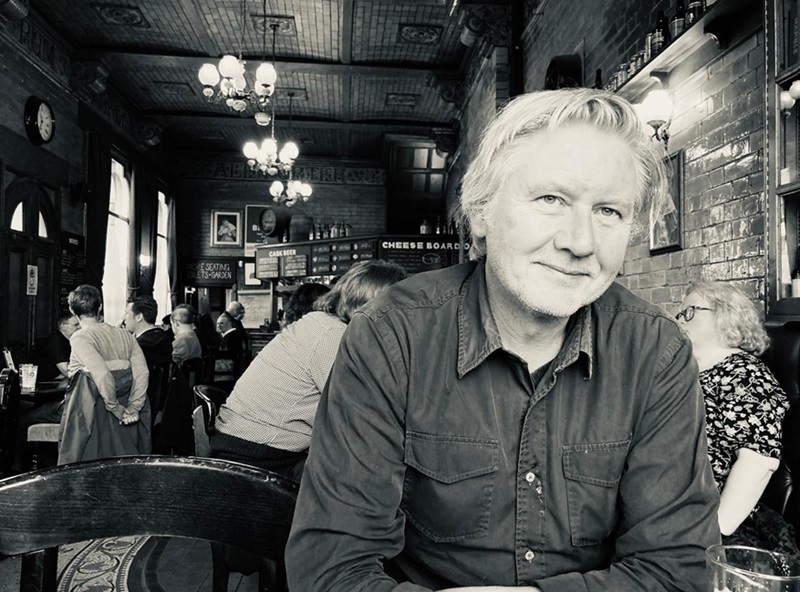
Chris Moss was born in Lancashire in 1966 and has lived in London, Buenos Aires, South Wales and Devon. After working as a teacher he began writing about travel, the arts, music and books.
He has written a cultural history of Patagonia, a literary compendium for London commuters, a flight-free guide to Europe and guidebooks to several countries. He now lives near Pendle Hill and his current journalism includes the ‘Where Tourists Seldom Tread’ column in The Guardian.
In his new book Lancashire – Exploring the Historic County that Made the Modern World, he rediscovers a Lancashire he left almost four decades ago. We turn the the spotlight on Chris as he nears the publication date (17 Feb) of his latest book with this quick Q&A.
______________________________________________
Where were you born and what are your earliest memories of Lancashire?
I was born in the village of Burtonwood, in southwest Lancashire, close to the Cheshire border. It’s famous for its airbase, which was used by the US during the Second World War and again from the Sixties. We passed through it on the school bus (no one else was allowed in) and wondered if it had nuclear silos. But it was mainly a massive storage facility – Europe’s largest – and played a part in the Berlin Airlift, and in bringing Northern Soul to Lancashire. A new monument, the Bolt of Lightning, was recently unveiled and it’s good to see Burtonwood getting recognition.
Half-way between Warrington and St Helens, and almost half-way between Manchester and Liverpool, Burtonwood was quite an idyllic place to grow up, a mix of colliery, brewing and agricultural village. Very much on the West Lancashire Plain, it made me fond of big skies and flat places.
Having lived and travelled elsewhere what drew you back to Lancashire? And what did you miss most (perhaps unknowingly) about the place when you weren’t here?
Coming home is complicated. You’re not sure what you miss, really. But there’s a nagging curiosity to see how it feels to try “home” again. I had lived in London twice adding up to quite a stint, plus ten years in Argentina and shorter periods in “strange lands” like Leeds, Devon and South West Wales. I wanted to hear my own (increasingly diluted) accent again, be among Lancastrians, stop being a tourist everywhere. But the truth is, after almost four decades living in other places, I’m a bit of an outsider still. I hope this adds to the book, allowing me to avoid being too parochial.
What I have rediscovered and enjoyed is simple things: local pubs, in cities, towns and the country; moorland walking; the seaside, which I like in all seasons; hearty food, including the wonderful pies. Friendly, down-to-earth people have made the homecoming a lot easier than it might have been.
I missed mild ale – but I still miss it, as it seems to have gone out of fashion!
How has life changed for you since returning? What have you rediscovered about the place?
Well, we have to consider first that I have come “home” only to an extent. Since 2021, I’ve lived in Pennine Lancashire, between Clitheroe and Gisburn in the Ribble Valley. That means: weather! It’s windier, wetter, darker, and because we live quite high up, just north of Pendle Hill, it can be cold. The shift from plains to hills means people are different. I come from a part of Lancashire that is close to two large cities, and very much open to ocean breezes and outside influences. Here, we’re somewhat isolated, more old-fashioned, and rural places are just more conservative, in all senses.
I think on the whole, this move to a different Lancashire has been a positive. Going to live near St Helens again might have been an encounter with just too many ghosts and memories. Industrial towns are much changed since I grew up in the Seventies and Eighties. For the book, of course I made forays into all corners of Lancashire, but it’s good to come back to somewhere tranquil and remote to write up thoughts and ideas.
What was the main driver/inspiration for your new book ? And why now ?
I didn’t begin with an overarching thesis but I knew I wanted to connect places to their history, music, art, people, food, architecture and people – and, with my travel writer hat on, to my impressions. I have had the fortune to travel widely, and so I come to places like Bolton, Fleetwood, Southport, Warrington, Wigan, Lancaster and elsewhere with my own memories and experiences of Patagonia, Siberia, China, Tasmania etc. I think globally, as well as locally. But Lancashire, of course, has had a huge impact on the world, as industrial powerhouse, as exporter and importer, as a slaving empire, as a birthplace of pop music and culture, as a maker of sublime art, literature and television.
One fundamental thing I have learned since the pandemic is: you can holiday on your doorstep. In the sense of, look at a town or city or village with curiosity, with hope, with openness to ideas and to people. My next book, out in July, looks at the UK through this lens.
The Lancashire book is subtitled “The Historic County that Made the Modern World”. This is both a reminder of the pre-1972/4 county borders and a sort of umbrella concept for the book. Chapters on cotton towns, music, film and television, glass and coal, radical politics and roadbuilding all come together under the powerful idea that out humble county has invented, pioneered and progressed a lot of the technologies, concepts and ideas that govern the way the modern world works.
Researching/writing the new book did you stumble across anything that really surprised you? (and that you hope will surprise your readers)
Heaps of discoveries, to be honest. The book made me realise how little local history and geography I was taught at school; and the media, while anxious to report again and again on failing high streets, rarely provide context. It was a huge education to learn about the layered history of Pendle Hill: the Quakers, the Chartists, Tom Leonard and Tom Stephenson – who did so much for walkers and rights of access. As well as the Witches, of course.
As a child I had often been taken to Blackpool and Southport. Dad loved the former, mum the latter. They always felt utterly different, but it was only when I researched their evolution that I understood why.
Then there’s St Helens, which was never explained to me or celebrated at all. And yet it was the home of England’s first great canal, the nation’s first great glassworks, the heart of a vital coalfield and chemical sector, and a place where immigration, town planning and sheer human energy created a thoroughly modern industrial town in the late 19th century. I call it a “crucible” in the book. Yet it is perceived by metropolitan folk and many mainstream historians as marginal to the defining narratives of the UK.
When recommending Lancashire to a new visitor – what are your ‘not-to-be-missed’ things to see and do ?
I would send them to the revamped Harris in Preston, to Clarion House near Roughlee, to Towneley Hall, to Whalley Abbey, to the World of Glass and the Dream, to the seafront at Liverpool and to the canals of Manchester – so that they could get a real sense of the diversity of wonders in our county. I’d then take them for a slap-up meal, at Aughton or to one of the Ribble Valley restaurants if they were posh, or to a cracking pub like the Brown Cow in Chatburn or the Marble Arch in Ancoats.
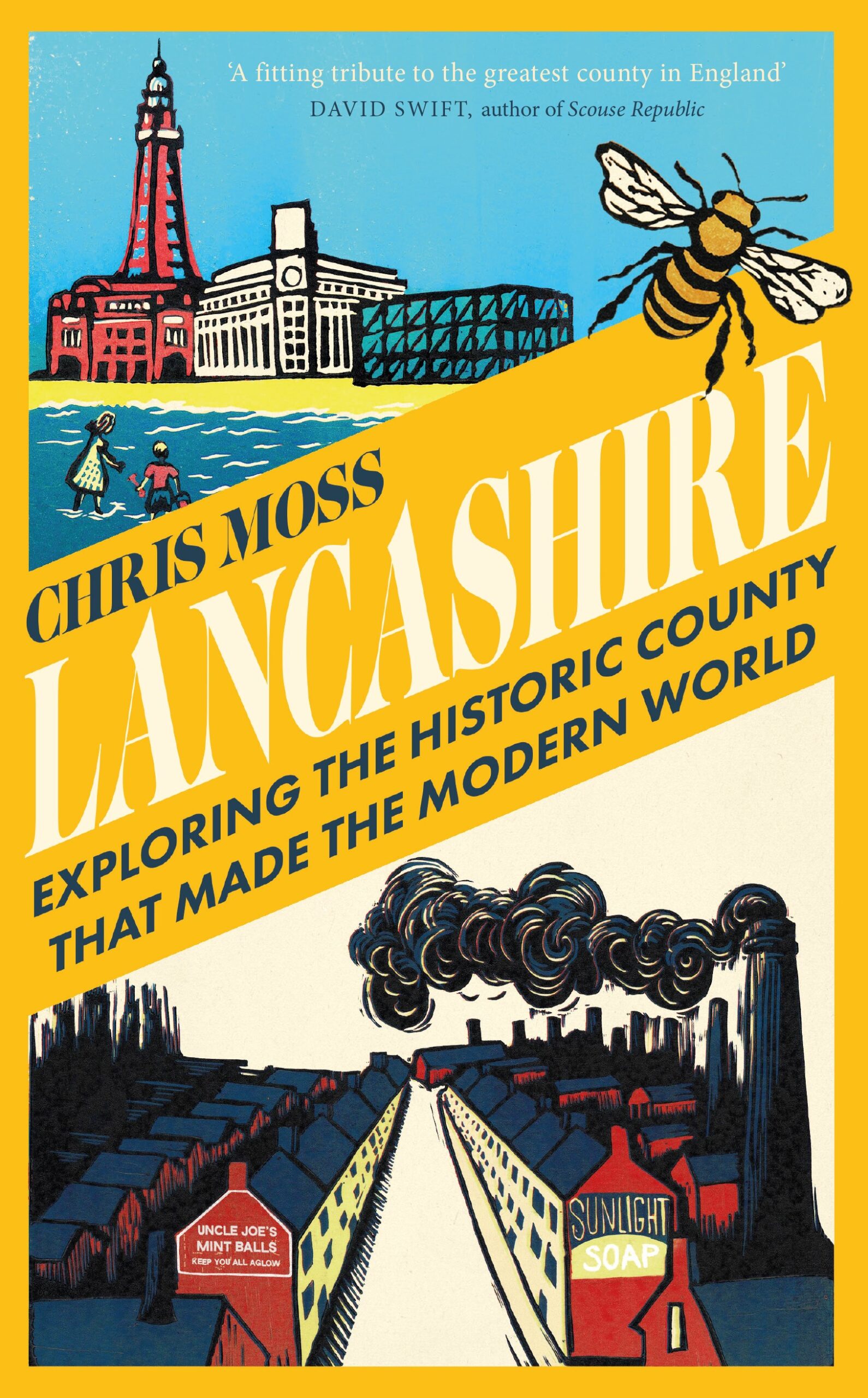
For a chance to win one of six copies of Lancashire – Exploring the Historic County that Made the Modern World click here
‘A Lancastrian rediscovers Lancashire: a deeply personal, well-crafted account of the Red Rose county’s past and present’
Brian Groom
‘Engrossing… Chris Moss takes us through a near-mythical landscape, a disappearing county of witches, mills, dales, meres, pop music and the first industrial proletariat’
Nicholas Blincoe
Lancashire: Exploring The Historic County that Made the Modern World is published by Old Street on 17 February 2026.