
DCMS skills and workplace update
- Home
- Media Centre
- Spotlight Features
- DCMS skills and workplace update
DCMS (Department for Culture, Media and Sport) has prepared an update for LVEPs (Local Visitor Economy Partnerships) outlining several recent policy developments relating to skills and workforce matters.
Employment Rights Act
The Employment Rights Act is a central pillar of the “Make Work Pay” plan, designed to drive economic growth by supporting employers, workers, and unions alike. By establishing a new baseline of security – including enhanced protections against sexual harassment, strengthened Statutory Sick Pay, and an end to “fire and rehire” practices – the Act ensures a fairer, more productive landscape for all.
Ultimately, these reforms aim to raise living standards and level the playing field for those businesses who are engaged in good practices, creating the secure conditions necessary for long-term, inclusive prosperity across Britain.
The Employment Rights Act:
● strengthens the collective voice of workers
● introduces the right to guaranteed hours and the right to reasonable notice and short
notice payments
● ends the unscrupulous fire and rehire practices
● improves access to flexible working
● strengthens Statutory Sick Pay
● introduces basic rights, from day one, to Unpaid Parental Leave and Paternity Leave
● ensures that employers will no longer be able to silence workers and use NDAs to
cover up harassment and discrimination in the workplace
● created the Fair Work Agency to ensure employment rights are upheld.
Two changes of particular note for the sector include:
Tipping laws (October 2026)
Employers will need to:
● Consult with workers or their representatives before creating a tipping policy
● update their tipping policy every 3 years
Zero-hours and low-hours contracts (TBC 2027)
Workers on zero-hours and low-hours contracts will have the right to choose if they want
guaranteed working hours.
Timeline/Implementation
The Employment Rights Act 2025, and the broader Plan to Make Work Pay, are being delivered in phases across a two-year period. This approach will ensure that employees and employers have time to plan and prepare. Some measures took effect in April 2026, including day-one rights to statutory sick pay and Paternity Leave, as well as the launch of the Fair Work Agency.
Later this year Government will introduce trade union reforms and improved sexual harassment protections.
Support for businesses
The Government is committed to supporting employers as they prepare for these changes. We are working in partnership with Acas and other delivery partners to provide guidance and support. Employers are being given the time and space to adapt systems, train staff, and update policies.
➢ Toolkit including copy and graphics to help you share information with businesses – click here
➢ Website for both employers and employees. It provides step-by-step guidance, practical tools and access to expert support to help businesses get ready.
This site also includes links to the open consultations where both employers and employees can feed in their views – click here
Youth Guarantee Expansion
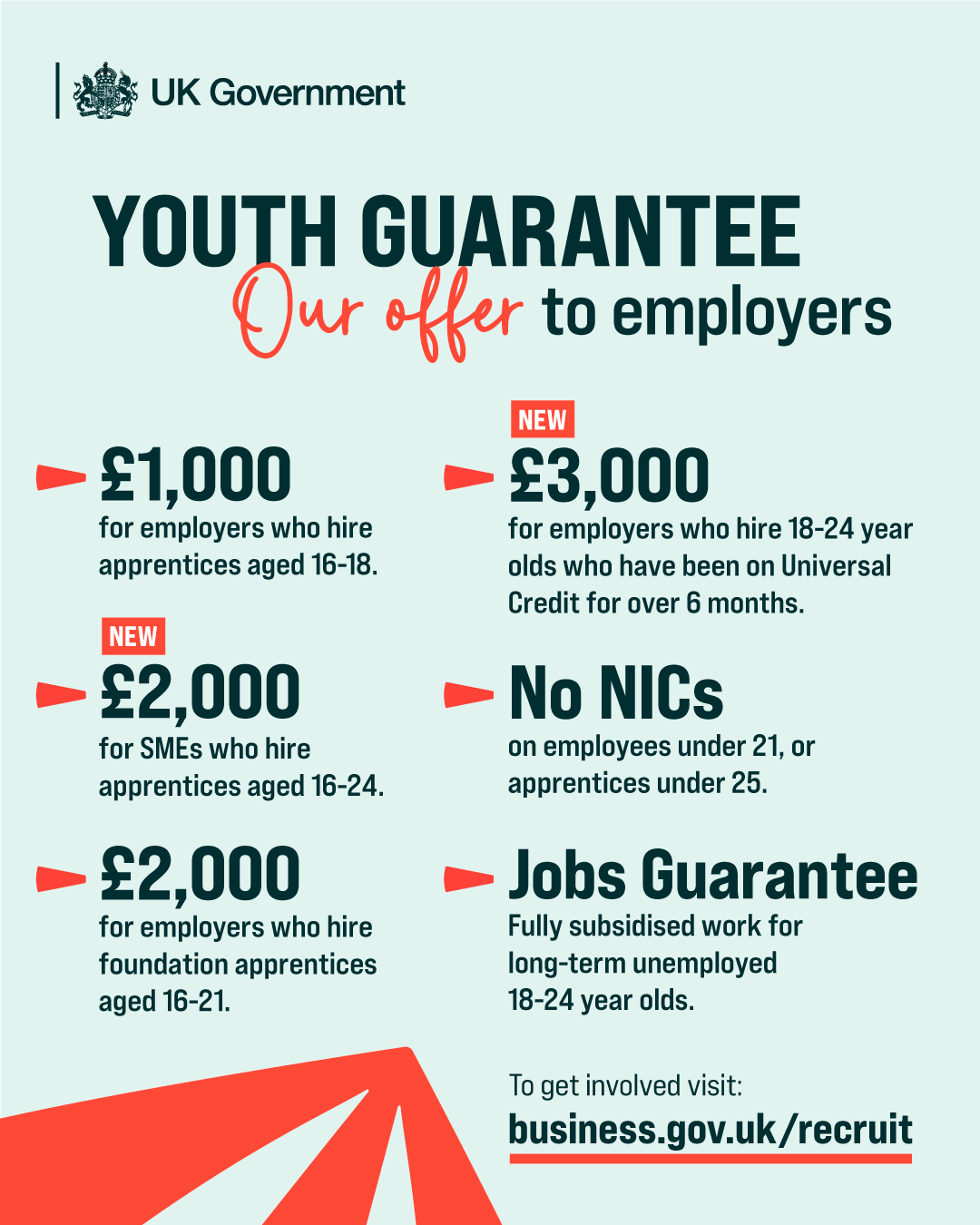
The Youth Guarantee is a major government initiative backed by £2.5 billion to ensure every young person aged 16–24 has the opportunity to earn or learn. It aims to create 500,000 new opportunities, including an expanded Jobs Guarantee that provides fully subsidised six-month paid work placements for eligible young people.
In addition to the policies already announced, further detail was provided on incentives for businesses recruiting young people, including:
● Apprenticeship incentive – £2k for recruiting an apprentice aged 16-24 from August 2026, plus an additional £1k for those under 19yrs old or those who have been in care.
● Youth Jobs Grant – £3k for employers who recruit young people aged 18-24 who have been on Universal Credit for at least six months.
➢ Businesses are encouraged to register for tailored advice on the support available to them at business.gov. uk/recruit
➢ The graphic attached lists the incentives available and can be used in comms for businesses.
Foundation Apprenticeships
After Foundation Apprenticeships were introduced in four sectors last year, the Government announced that Hospitality and Retail would start from April 2026, recognising the sectors as vital gateways into the workforce for young people.
Foundation apprenticeships bridge the gap between formal learning in school or college and the world of work, through a blend of structured learning with authentic on-the-job experience and accountability.
At level 2, they introduce learners to an industry and lay a foundation on which realistic choices about further education or employment can be based. This means employers can be confident that the learner has the knowhow and competencies needed to embark upon the next level of career or training progression. Businesses who employ workers on Foundation Apprenticeships can access the benefits
Update2026
available through the Youth Guarantee, see here for more details.