
Chorley’s first-ever Habitat Bank opens in Croston
Chorley’s first-ever Habitat Bank at Isle of Man Farm, Croston, is set to deliver significant environmental benefits and create new opportunities for biodiversity enhancement across the borough.
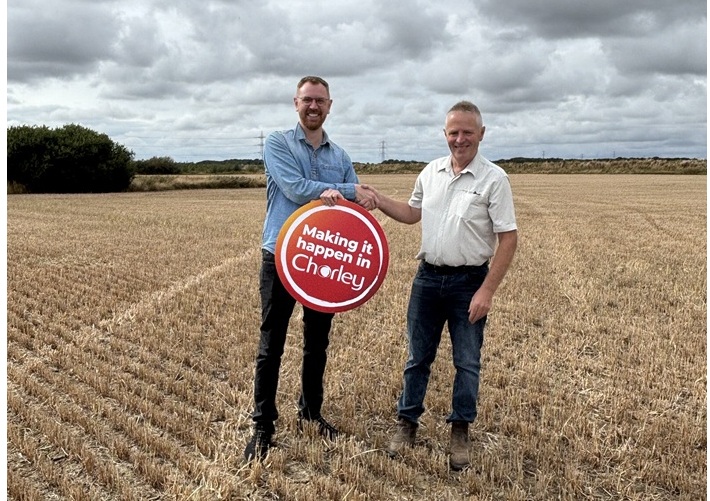
The newly established Habitat Bank at Isle of Man Farm represents an important step forward in supporting nature recovery and delivering Biodiversity Net Gain (BNG), a statutory requirement that ensures development leaves the natural environment in a measurably better state than before.
Habitat banks provide an off-site solution for developers who are unable to achieve their biodiversity objectives within the boundaries of their development sites. Through the creation, restoration and long-term management of natural habitats, habitat units can be generated and allocated to support mandatory BNG requirements.
Located within an area of historic drained fenland, the Croston site has been under agricultural cultivation since drainage systems were introduced in the 1800s. The project will transform land previously dominated by intensive farming practices into a rich and diverse wetland landscape, delivering lasting conservation benefits for wildlife and local biodiversity.
The site’s natural soil conditions make it ideally suited for the creation of a floodplain wetland mosaic habitat. Plans include restoring species-rich grassland meadows alongside the creation of reedbeds, ponds, ditches, fen habitat, wet woodland, and scrub. Together, these habitats will support a wide range of plants, insects, birds, and other wildlife while contributing to local nature recovery priorities.
The transition from arable farmland to high-quality wetland and grassland habitats will not only enhance biodiversity but also help build resilience to environmental challenges and improve the ecological value of the landscape for at least the next 30 years.
In addition to its environmental impact, the project will deliver important social benefits. Fairy Bridge Nursery, located on the site, provides care and education for around 60 children aged between two and five years old. The developing habitats will offer a unique outdoor learning environment, allowing young children to engage directly with nature, wildlife, and environmental education as part of their early years’ development.
Cabinet member for Planning and Development, Councillor Alex Hilton, said: “The establishment of Chorley’s first Habitat Bank is incredibly exciting and a significant milestone for biodiversity and nature recovery in the borough.
“Projects like this demonstrate how land can be used to support wildlife, enhance habitats, and help meet the requirements of Biodiversity Net Gain, while also delivering wider benefits for local communities.
“We encourage development to prioritise avoidance or loss of ecologically valuable habitats and minimise impacts where possible. Where off-site units are required to meet the statutory Biodiversity Net Gain, these should be sourced as locally as possible.
“I would like to thank the landowner of the Isle of Man Farm, David Harrison, and Townsend Chartered Surveyors, who carried out the initial work to help make the scheme a reality. Their commitment and collaboration have helped create a valuable new asset for nature and the borough.
“It is also particularly encouraging to see the educational opportunities this site will provide for children at Fairy Bridge Nursery, helping to connect the next generation with the natural environment and the importance of protecting it.
Hugh Townsend, Founder of Townsend Chartered Surveyors, said: “It has been a pleasure to assist Mr Harrison on this project.
“With the impact of climate change and the increasing pressures on conventional agricultural activity felt all around us, this project aims to secure a viable, long-term future for his farm by delivering meaningful biodiversity and environmental improvements whilst preserving the character of the Lancashire and Amounderness landscape for future generations.
“We look forward to helping Mr Harrison with the monitoring and management of the Habitat Bank over the next 30 years.”
The Isle of Man Farm Habitat Bank in Croston is the first of its kind in Chorley and demonstrates how innovative approaches to land management can support both sustainable development and the council’s wider ambitions for protecting and enhancing the natural environment.
More information about BNG and Habit Banking can be found at chorleyclimatechange.co.uk/biodiversity-net-gain-bng